

-
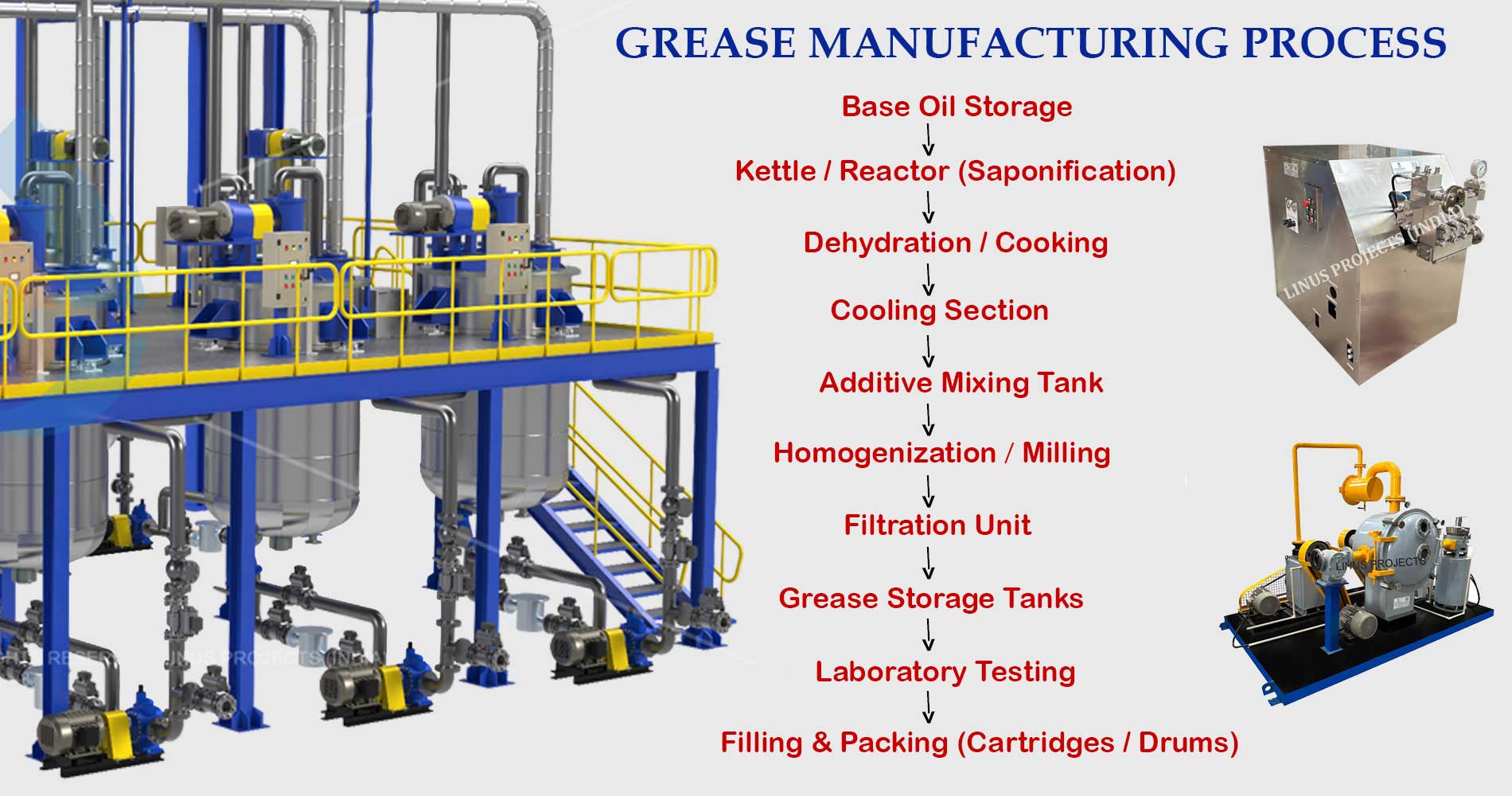
Grease Manufacturing Process
-

Grease Manufacturing Unit
Grease Manufacturing Process
LINUS PROJECTS LIMITED (NIGERIA) is an ISO9001:2015 certified Multinational organization established in the year 2014.
The manufacturing of grease consists of blending a base oil—like mineral oil, synthetic oil, or vegetable oil—with a thickener such as metallic soap and performance-enhancing additives in large industrial kettles or reactors. The method can vary based on the type of grease being created, whether it is soap-based or non-soap. When heated and mixed, these ingredients undergo a chemical reaction called saponification. The final product is a soap-like material suspended in oil, which gives grease its distinctive semi-liquid consistency. Nigeria is a major exporter of crude oil and petroleum products to various countries. Launching a grease manufacturing venture can yield significant profits. Grease comes in multiple varieties, mainly distinguished by their thickener or base oil. In Nigeria, grease is essential to the nation's progress towards establishing itself as a flourishing industrial hub.
How is industrial Grease Manufactured?
1. Base Oil Storage - Raw Materials (Base Oil, Fatty Acids, Alkali, Additives)
2. Kettle / Reactor (Saponification - Formation of Soap Thickener)
3. Dehydration / Cooking - Water Removal (Heating to remove moisture)
4. Shearing and Cooling Section
5. Additive Mixing Tank - Additive Addition (Antioxidants, EP, Corrosion inhibitors)
6. Homogenization / Milling (Smooth Texture)
7. Filtration Unit (Remove Impurities, stabilize product)
8. Grease Storage Tanks
9. Laboratory Testing (Drop Point Test, Oxidation Stability Test, Four-Ball Wear Test)
10. Filling & Packing (Cartridges / Drums)
Grease Manufacturing Process Explained
1) Raw Material Acquisition & Storage in Tanks:
• Base Oil: Generally made from mineral oil, synthetic oil, or sometimes vegetable oil.
• Thickener: Comprises metallic soap (lithium, calcium, aluminum, sodium), polyurea, or non-soap materials (clay, silica).
• Additives: Feature anti-oxidants, rust inhibitors, EP (extreme pressure) agents, anti-wear substances, and corrosion inhibitors.
2) Grease Kettle / Reactor:
The reactor (kettle) is filled with base oil and heated. After that, the thickener components are added and mixed well.
Three Categories Of Grease Kettles (Reactors):
• Pressure kettle (reactor)
• non-pressure kettle (reactor)
• Bottom conical kettle (reactor)
3) Dehydration / Cooking:
The combination is heated to a significant temperature, often between 160°C and 200°C, with continuous stirring to commence a chemical reaction referred to as saponification. At this point, water, a byproduct of the reaction, is typically removed through evaporation.
4) Shearing and Cooling Section:
The heated mixture is meticulously and progressively cooled. The remaining base oil and additives are added in this phase. Proper control of the cooling is vital, as it facilitates the crystallization of soap fibers, forming a stable, gel-like network that provides the grease with its semi-solid consistency and structure.
5) Additive Mixing Tank:
Performance additives are mixed in after the cooling process. When the grease cools to a specific temperature (for example, 80-100°C), various performance-enhancing additives, such as anti-wear agents, corrosion inhibitors, antioxidants, anti-rust agents, and extreme pressure agents, are incorporated to achieve the desired final properties. These additives improve oxidation stability, load-carrying performance, and corrosion resistance.
6) Homogenization / Milling:
The Grease Milling and Deaerating System is a crucial component in the grease production process. This system is utilized in grease manufacturing to refine, homogenize, and improve the quality of lubricants by removing trapped air bubbles, ensuring uniform consistency, and enhancing overall quality and stability, while complying with stringent hygiene standards to maintain product purity.
7) Filtration Unit:
The Grease Filtration Unit is essential for ensuring that the final product is thoroughly filtered to remove any solid contaminants, impurities, undissolved particles, soap fibers, dust, or unreacted solids. It provides a smooth texture, reduces the need for rework or rejection, and guarantees consistent quality.
8) Grease Storage Tanks:
Grease Storage Tanks are specifically designed vessels that safely hold finished grease products or intermediate grease materials before they are packaged or undergo further processing. Grease has a semi-solid form and can differ greatly in viscosity. These tanks maintain grease at a stable temperature and consistent texture. They act as buffer tanks linking production and packaging operations.
9) Laboratory Testing:
Various forms of grease are manufactured, each with its own set of properties, qualities, and uses. Quality testing of grease in a laboratory setting ensures that it meets the performance, consistency, stability, and protection standards necessary for its intended applications.
Types of Gease Testing:
• Drop Point Test
• Oxidation Stability Test
• Four-Ball Wear Test
• Water Resistance & Washout Test
• Corrosion & Rust Tests
• Load Carrying & Wear Properties
• Cone Penetration Test
10) Filling & Packing (Cartridges / Drums)
The produced grease undergoes testing for consistency and performance before being packaged for distribution. It is filled into various containers, including cartridges, jars, pouches, drums, or smaller containers. Grease Filling Machines can be either Semi-Automatic, ideal for small-scale operations, or Fully Automatic, designed for high-volume production.

GREASE MANUFACTURING PLANT COST
Automatic and Semi-Automatic Grease Plant.
GREASE MANUFACTURING PLANT & MACHINERY
Setting up a grease production plant equipment and machinery.
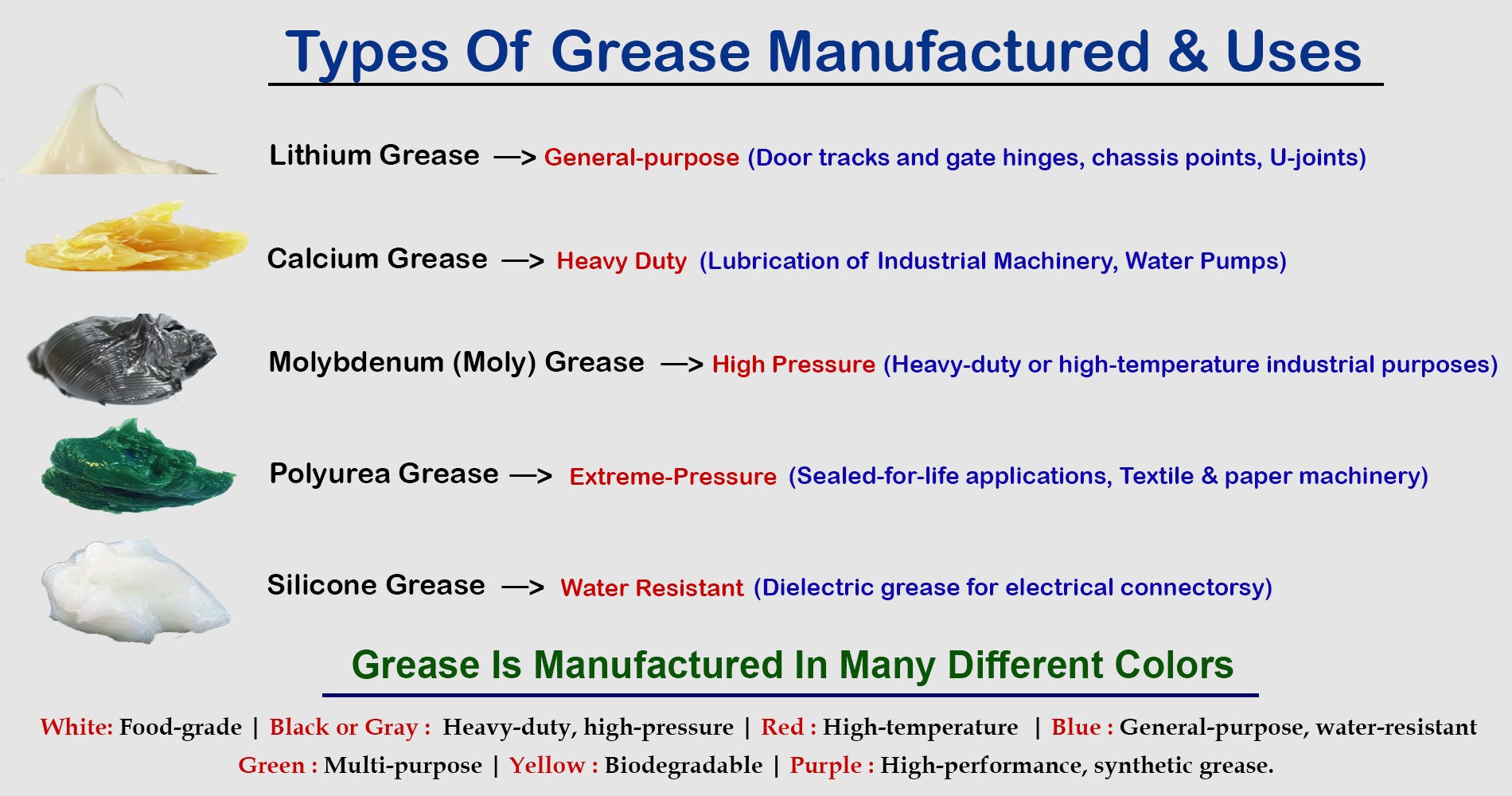
TYPES OF GREASE AND THEIR USES
Soap-Based Greases and Non-Soap Greases
Grease Manufacturing Process PDF
Grease Manufacturing Process is explained in brief for more information please contact us. We give complete guidance and undertake complete grease plant installation.
 Download Grease Manufacturing Process PDF
© Copyright 2024 All Rights Reserved. Linus Projects Limited Nigeria